Cisco Cisco RV345
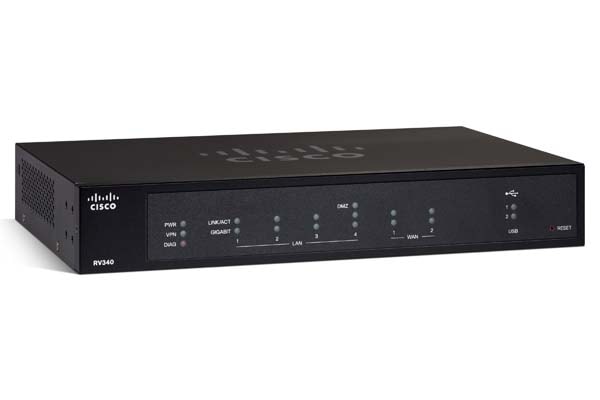
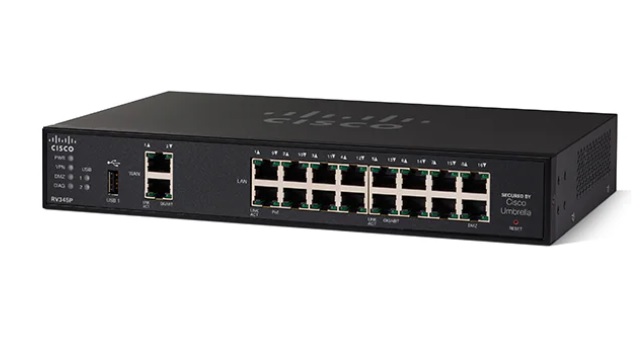
- The Cisco RV345 is a compact, all-in-one router designed for small businesses and home offices.
Specifications
- OS
- Embedded Linux
- CPU
- Dual-core
- IDS/IPS
- Yes
- LAN
- Gigabit Ethernet
- QoS
- Yes
- RAM
- 512 MB
- USB
- 2x USB 3.0
- UTM
- Yes
- VPN
- IPsec/PPTP/OpenVPN
- WAN
- Gigabit Ethernet
- Flash
- 32 MB
- SD-WAN
- Yes
- Firewall
- Yes
- Sessions
- 900,000
- LAN Ports
- 16x GE
- Max VLANs
- 30
- VPN Peers
- 50
- WAN Ports
- 2x GE
- Management
- Web UI
- Throughput
- 900 Mbps
Potential Threats
25 Known CVEs
Default IP
192.168.1.1
Default admin panel address for Cisco Cisco RV345
Default Credentials — Cisco Cisco RV345
Known CVE Vulnerabilities (25)
A vulnerability in the web-based management interface and in the API subsystem of Cisco Tetration could allow an authenticated, remote attacker t...
A vulnerability in Cisco RCM for Cisco StarOS Software could allow an unauthenticated, remote attacker to perform remote code execution on t...
A vulnerability in a debug function for Cisco RCM for Cisco StarOS Software could allow an unauthenticated, remote attacker to perform debug...
Multiple vulnerabilities in the web-based management interface of Cisco Small Business RV016, RV042, RV042G, RV082, RV320, and RV325 Routers could all...
Multiple vulnerabilities in the web-based management interface of Cisco Small Business RV016, RV042, RV042G, RV082, RV320, and RV325 Routers could all...
Multiple vulnerabilities in the web-based management interface of Cisco Prime Infrastructure and Cisco Evolved Programmable Network Manager (EPNM) cou...
Multiple vulnerabilities in Cisco Small Business RV160, RV260, RV340, and RV345 Series Routers could allow an unauthenticated, remote attacker to exec...
Multiple vulnerabilities in Cisco Small Business RV160, RV260, RV340, and RV345 Series Routers could allow an unauthenticated, remote attacker to exec...
A vulnerability in the logging component of Cisco Adaptive Security Device Manager (ASDM) could allow an authenticated, local attacker to view sensiti...
A vulnerability in the NX-API feature of Cisco NX-OS Software could allow an authenticated, remote attacker to execute arbitrary commands with root pr...
Showing 10 of 25
FAQ
The most common default credentials for Cisco Cisco RV345 are listed in the table above. Always change these immediately after setup.
The default username for Cisco Cisco RV345 is typically "admin". The full list of default credentials including username, password, access type and port is shown in the table on this page.
Log in to the admin panel using the default credentials listed above. Navigate to Administration → Password or System → Account settings. Enter the current password and set a new strong password. Save the changes.
Locate the Reset button (usually a small pinhole on the back/bottom of the device). Hold it for 10-30 seconds while powered on until the LEDs flash. The device will reboot with default settings.
No. Default credentials are publicly known and frequently exploited by automated scanners. Change the admin password immediately after first login.
The default admin login address for Cisco Cisco RV345 is shown in the "Default IP" field above. Most routers use 192.168.1.1 or 192.168.0.1. Open a browser on a device connected to the router and navigate to that IP.
Log in to the router admin panel at the default IP address. Go to Wireless or Wi-Fi settings. Find the WPA2/WPA3 passphrase field and update it. Save and reconnect your devices.
Change the default admin password and Wi-Fi password immediately. Disable WPS (Wi-Fi Protected Setup) — it is vulnerable to brute-force attacks. Enable WPA3 encryption if supported. Turn off remote management unless needed. Keep firmware updated.
Cisco Cisco RV345 has 25 known CVE vulnerabilities documented in our database. The full list with severity ratings is shown on this page. Apply the latest firmware update from the manufacturer to address known issues.